How Far in Advance Should You Schedule Hydroseeding in Decorah IA?
Hydroseeding can establish a healthy lawn at a lower cost than sod, but getting good results involves more than choosing an installation date. Contractors need time to evaluate the property, prepare soil, coordinate grading, and work around weather. If you're wondering how far in advance should you schedule hydroseeding in Decorah IA, a good rule is to contact a contractor two to four weeks before your preferred installation date.
During busy spring and late-summer periods, scheduling four to six weeks ahead can be even better, especially if the project also requires finish grading, topsoil, erosion control, or significant site preparation.
Planning early does not necessarily mean locking the project into one exact day. Hydroseeding is weather-dependent, so professional contractors often schedule within a practical window that can shift around heavy rain, saturated soil, or extreme heat.
How Far in Advance Should You Schedule Hydroseeding in Decorah IA?
For most residential projects, these planning windows are reasonable:
Simple hydroseeding on prepared soil: 1–3 weeks ahead
Hydroseeding with finish grading: 2–4 weeks ahead
New construction lawn with topsoil and grading: 3–6 weeks ahead
Large or erosion-prone property: 4–6+ weeks ahead
Peak late-summer season: schedule as early as possible
The actual lead time depends on contractor workload, weather, lawn size, and whether other work must happen first.
If you know you want the lawn installed in September, for example, contacting your contractor in July or early August gives much more flexibility than calling a few days before your desired date.
Late Summer Is a High-Demand Time
In Iowa, the best period for establishing cool-season grass from seed is generally mid-August through mid-September. Warm soil helps grass seed germinate quickly while the cooler days and nights of early fall support strong turf development.
That makes this window particularly attractive for hydroseeding.
It also means contractors can become busy.
If you want a late-August or early-September hydroseed application in Decorah, scheduling three to six weeks ahead is a practical strategy.
Waiting until September to begin requesting estimates may limit your available installation dates.
Can You Schedule Hydroseeding in Spring?
Yes.
Spring hydroseeding is possible, particularly from early April through mid-May when irrigation is available. However, spring-seeded lawns can face more weed competition than lawns established in late summer.
Spring projects also face another scheduling challenge: wet ground.
Snowmelt and spring rainfall can leave soil too saturated for:
Skid steers
Grading equipment
Topsoil delivery
Final seedbed preparation
Even if your hydroseed application only takes a few hours, preparing the property may need to wait until the soil becomes workable.
For spring projects, contacting a contractor three to four weeks ahead provides some flexibility around these weather delays.
Why Mid-Summer Requires More Planning
Hydroseeding can be completed in summer, but establishing cool-season turf during the hottest part of the year can be more demanding.
Iowa State University guidance notes that establishing lawns from seed between late May and mid-August can be significantly more difficult because of summer conditions.
That does not mean summer hydroseeding cannot work.
It means homeowners should be prepared for:
Frequent watering
Faster surface drying
Heat stress
Greater irrigation demand
Possible storm washout
If summer is your only practical installation period, scheduling ahead allows the contractor to choose a favorable weather window rather than forcing the project into an extremely hot week.
Site Preparation May Determine Your Schedule
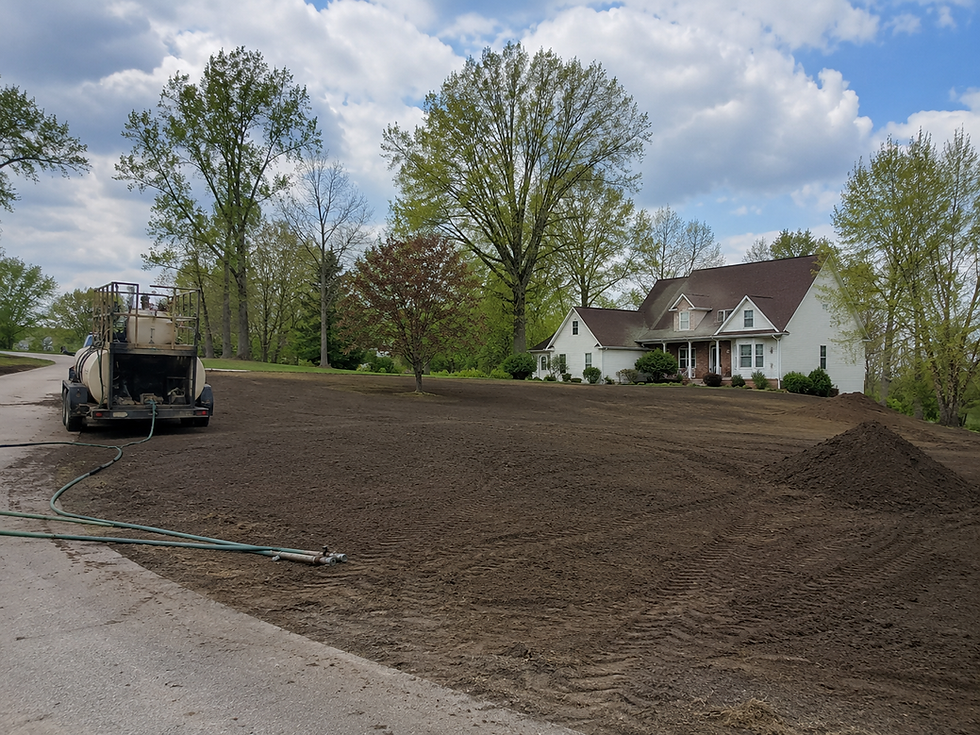
Many hydroseeding projects require work before the hydroseed truck arrives.
Preparation can include:
Removing weeds and existing vegetation
Finish grading
Bringing in screened topsoil
Correcting drainage
Removing rocks and construction debris
Loosening compacted soil
Preparing slopes
Iowa State recommends having approximately 4 to 6 inches of good soil for establishing a new lawn, with additional topsoil or organic matter incorporated where necessary.
For a new construction property, soil preparation may take considerably longer than the actual hydroseeding.
This is why scheduling the entire lawn project—not simply the hydroseed application—is important.
New Construction Lawns Should Be Planned Early
New homes frequently have unfinished yards containing:
Compacted subsoil
Construction debris
Uneven grades
Poor drainage
Thin topsoil
If your builder is still completing exterior work, coordinate hydroseeding after major construction traffic has finished.
Installing a new lawn too early can result in damage from:
Concrete crews
Utility work
Heavy equipment
Material delivery
Final downspout installation
For new construction, contacting a landscaper four to six weeks before the expected exterior completion date can help coordinate grading and hydroseeding more efficiently.
How Weather Affects Your Actual Installation Date
Hydroseeding does not require perfectly dry weather, but the soil needs to be workable.
Heavy rainfall may delay grading because operating equipment on saturated ground can create compaction and deep ruts.
On the other hand, extremely dry soil may need to be lightly moistened before preparation.
Thunderstorms can also affect freshly applied hydroseed, especially on steep slopes where runoff can move seed and mulch.
Professional scheduling therefore usually involves a target window rather than guaranteeing a date weeks in advance regardless of weather.
Plan Irrigation Before the Hydroseed Is Applied
One thing homeowners should not wait to organize is watering.
Hydroseed needs consistent moisture immediately after installation.
If you're planning to use:
Temporary sprinklers
Garden hoses
Hose timers
Permanent irrigation
have everything ready before installation day.
Do not wait until the hydroseed is already applied to discover that a hose does not reach the back corner of the yard.
Properties with several sprinkler zones may need multiple hoses and timers to maintain even moisture.
Schedule Sloped Properties Earlier
Slopes require more planning because erosion-control measures may be necessary.
A sloped project may need:
Tackifier
Erosion-control blankets
Straw wattles
Drainage changes
Additional grading
These materials and labor should be planned before application.
A contractor may also want to inspect the property after rainfall to understand how water naturally moves across the slope.
For erosion-prone properties, scheduling three to six weeks ahead is often worthwhile.
How Much Does Hydroseeding Cost in Decorah IA?
Hydroseeding costs depend on lawn size, seed mixture, slope, access, additives, and preparation.
For Decorah homeowners, practical planning ranges may include:
Basic hydroseeding on prepared soil: approximately $0.10–$0.30 per square foot
Premium seed, mulch, fertilizer, and tackifier: approximately $0.15–$0.40+ per square foot
Minor grading and site preparation: approximately $800–$2,000+
Screened topsoil: approximately $40–$70 per cubic yard
Erosion-control blankets or slope stabilization: additional
Small hydroseed projects may have minimum service charges, which can make the effective price per square foot higher.
A large new-construction lawn with grading and topsoil can cost several thousand dollars even if the hydroseed application itself represents only part of the total.
Should You Get a Quote Months in Advance?
You can.
For projects connected to new construction, major grading, or a specific completion deadline, requesting a quote several months ahead can be useful.
However, some project conditions may change between the quote and installation.
For example:
Final grades may change
Lawn square footage may increase
Additional topsoil may be needed
Construction equipment may disturb completed areas
The contractor may need to verify the site again closer to installation.
What If You Need Hydroseeding Quickly?
Sometimes homeowners need a lawn installed quickly because:
A construction project has just finished
Soil is beginning to erode
A property is being prepared for sale
An event is approaching
Contacting a contractor is still worthwhile.
If the property is already prepared and the schedule allows, installation may be possible relatively quickly.
However, rushing grading or soil preparation simply to meet an installation date can create long-term lawn problems.
A properly prepared lawn installed slightly later is usually a better investment than hydroseed applied immediately over poor soil.
Frequently Asked Questions
How early should I book hydroseeding in Decorah?
Two to four weeks ahead is a good general guideline. During peak late-summer season, three to six weeks is safer.
What is the best month to hydroseed in Iowa?
Late August through mid-September provides excellent conditions for cool-season lawn establishment in Iowa.
Can I book hydroseeding several months ahead?
Yes, particularly for new construction or larger projects. The contractor may verify site conditions again before installation.
Can hydroseeding be done in spring?
Yes. Early April through mid-May can work, although spring lawns face greater weed competition.
Is July a good time to hydroseed?
It is possible with reliable irrigation, but midsummer heat makes establishment more difficult than late summer or early fall.
Should grading be completed before I schedule hydroseeding?
Ideally, discuss both together. Your hydroseeding contractor may also provide or coordinate finish grading.
What if it rains on my scheduled installation date?
Heavy rain or saturated ground may require the project to move to another suitable day.
Do I need sprinklers ready before installation?
Yes. Your watering setup should be ready to operate immediately after the hydroseed is applied.
Contact a Decorah Sod & Hydroseed Company
So, how far in advance should you schedule hydroseeding in Decorah IA? For a straightforward project, contacting a contractor two to four weeks ahead is usually a good starting point. For late-summer installations, new construction lawns, grading projects, or erosion-prone slopes, scheduling four to six weeks ahead provides more flexibility.
The best lawn results come from coordinating preparation, weather, seed timing, and irrigation rather than choosing a hydroseed date at the last minute.
If you're planning hydroseeding, sod installation, finish grading, erosion control, or a new construction lawn in Decorah, contact our team early. We can evaluate your property, recommend the best installation window, and provide a personalized estimate based on lawn size, soil conditions, grading, and project goals.


Comments